
Introduction
Compare freelancing and remote jobs in 2025. Learn key differences, benefits, and which career path is right for you in the digital age.
The way people work has changed dramatically in recent years. In 2025, more professionals are choosing flexible careers that allow them to work from anywhere. Two of the most popular career paths are freelancing and remote jobs. While both provide flexibility and freedom, they come with different benefits and challenges.
If you are confused about which path to choose, this article will help you understand the key differences between freelancing and remote jobs in 2025, so you can decide what’s best for your career goals.
What is Freelancing?
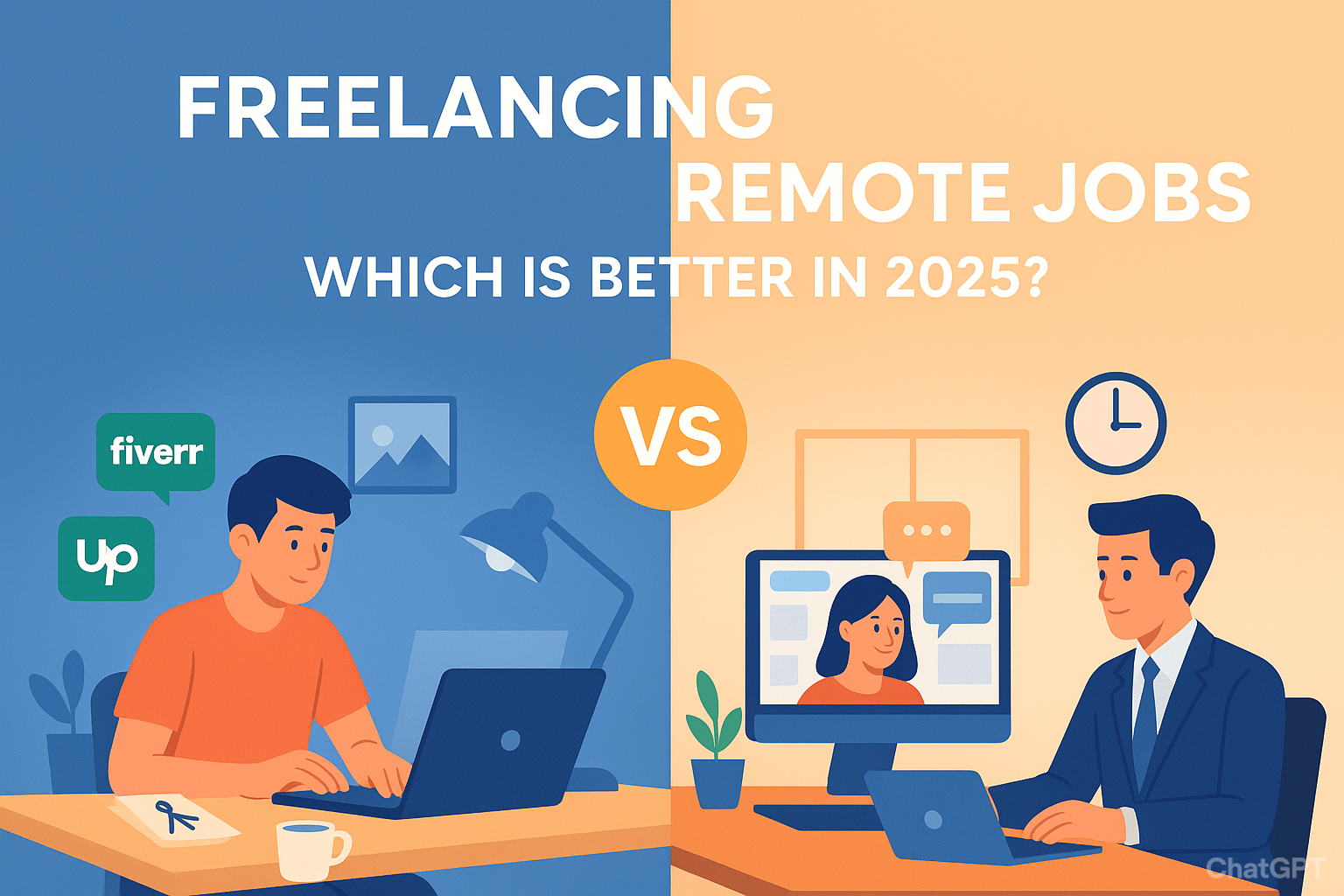
Freelancing means offering your services to clients on a project or contract basis. Freelancers are independent workers who usually find clients through platforms like Fiverr, Upwork, or direct networking.
Pros of Freelancing:
-
Flexibility: Work when and where you want.
-
Unlimited Earning Potential: The more clients you serve, the more you earn.
-
Skill-Based Growth: Freelancers can specialize and charge higher rates over time.
-
Variety of Work: Exposure to different industries and projects.
Cons of Freelancing:
-
Unstable Income: Earnings may vary month to month.
-
No Employee Benefits: No paid leave, health insurance, or retirement plans.
-
Self-Management Required: You must handle your own taxes, clients, and workload.
What are Remote Jobs?
A remote job means working for a company as a full-time or part-time employee but from outside a traditional office. Remote workers are on payroll, get benefits, and often have fixed working hours.
Pros of Remote Jobs:
-
Stable Income: Monthly salary provides financial security.
-
Employee Benefits: Health insurance, paid leave, and retirement savings.
-
Professional Growth: Opportunity for promotions and skill development.
-
Work-Life Balance: Many companies now prioritize flexible schedules.
Cons of Remote Jobs:
-
Less Flexibility: Fixed hours and company rules may limit freedom.
-
Dependence on Employer: Income and career growth are tied to the company.
-
Limited Side Projects: Some companies restrict outside freelancing.
Freelancing vs Remote Jobs: Key Differences
| Feature | Freelancing | Remote Jobs |
|---|---|---|
| Work Flexibility | High (choose your own hours) | Moderate (depends on company) |
| Income Stability | Variable | Stable salary |
| Benefits | None (self-managed) | Health, leave, retirement |
| Career Growth | Depends on personal effort | Structured growth opportunities |
| Risk | High (uncertain projects) | Low (stable employer) |
| Control | Full independence | Limited by employer policies |
Which is Better in 2025?
The answer depends on your goals:
-
Choose Freelancing if you value independence, flexibility, and want to scale your income based on skills and effort.
-
Choose Remote Jobs if you prefer stability, benefits, and long-term career growth with a company.
Some professionals even combine both — working remotely while freelancing part-time to diversify income streams.
FAQs
Q1: Can freelancing replace a full-time remote job?
Yes, but it requires strong skills, client management, and consistency.
Q2: Which is better for beginners in 2025?
Remote jobs are safer for beginners, while freelancing works well for those with marketable skills.
Q3: Can I do both freelancing and a remote job?
Yes, if your employer allows side projects. Many people use freelancing to boost extra income.
Conclusion
In 2025, both freelancing and remote jobs are excellent career options. Freelancing gives you freedom and unlimited earning potential, while remote jobs provide stability and security. Your choice depends on your lifestyle, goals, and risk tolerance.
The best part is that with today’s technology, you don’t have to choose just one. Many professionals successfully combine both paths to build a secure yet flexible career.